Earning a return on member investments
Founding members take on extra risk and work before the business is established. We want to recognize that fairly without giving those with more money control over everyone else.
- Interest on member capital or loans.
- Surplus allocated based on capital contributed.
- A founder allocation to recognize the extra risk and setup work.
- Priority repayment terms for early capital.
- A stronger claim on future surplus, if members agree to this in the co-op rules.
Tracking and protecting member investments
- Clear records of every member’s financial or in-kind contribution.
- Track contributions you put in, agreed interest, allocated surplus, payments, and withdrawals.
- Independent accounting and auditing with regular financial reporting.
- Conservative budgets for each project and project-by-project borrowing where possible.
- Layered ownership structures of projects to protect core co-op business and members from excess liability.
- Clear approval processes for spending and a focus on building up reserves for slow periods and emergencies.
Co-operative Capital Units
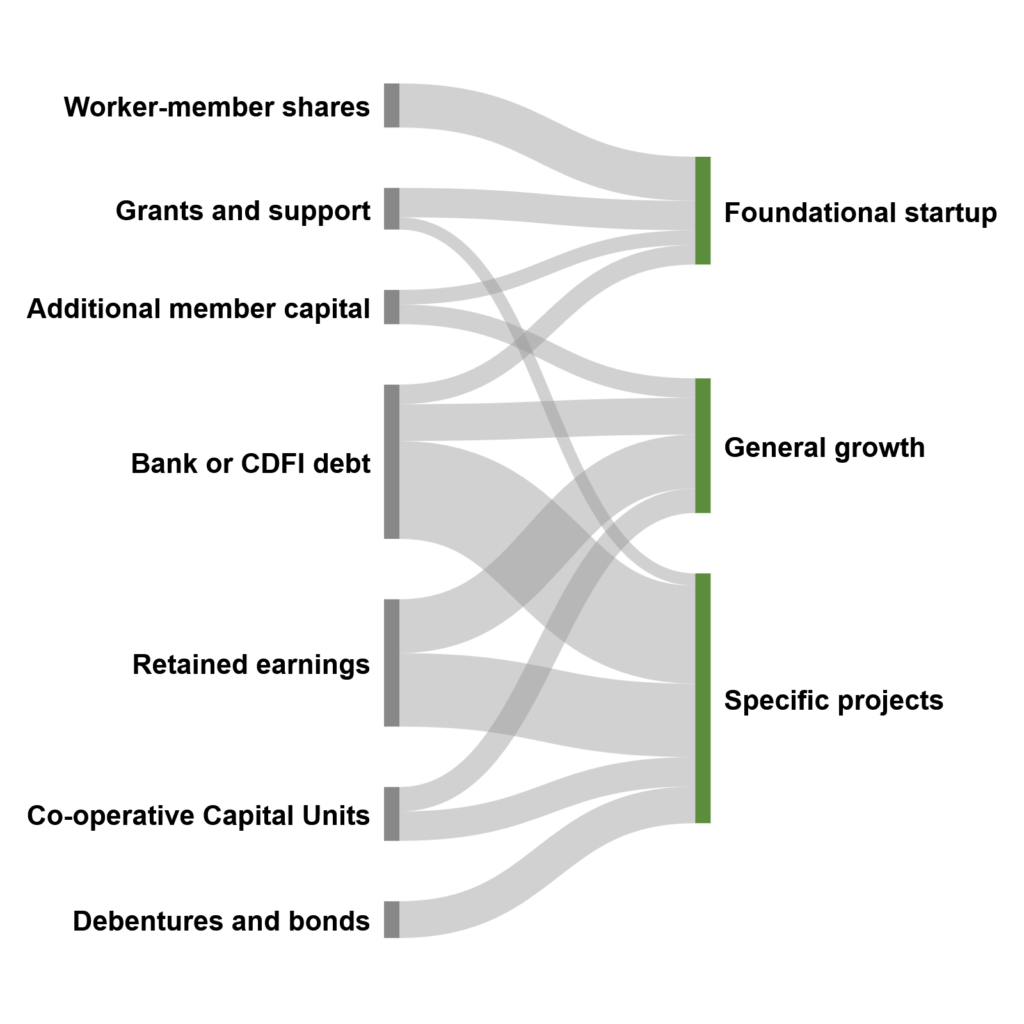
Co-operative Capital Units (CCUs) are a flexible way of raising money without giving investors control of the business.
- CCU investors receive agreed financial rights, but do not become a member or get voting rights.
- CCUs allow raising capital from internal members as well as external supporters, businesses, or other investors. •
- CCUs can be structured more like debt with regular interest and repayment, or more like equity with dividends, capital growth, and repayment under agreed circumstances.
- CCUs can be setup as transferable under co-op rules and terms of issue.
Non-financial capital investments
Members and external investors could contribute property, workshops, equipment, or deferred pay for their work.
- Property or land: Owners of property could let the co-op develop the land in exchange for a deferred purchase price with interests and/or a share of the surplus from developing and building on this land.
- Workshops of factories: Members might already have their own plants they could provide for co-op use in exchange for agreed rates and/or a share of any surplus from projects using these plants.
- Equipment or tools: Items contributed for co-op use based on fair value, hire fees, or an agreed ownership arrangement.
- Deferred pay. Part of pay held back at the start. Recorded as money owed to you under agreed terms.